Key takeaways
- Find the best laboratory drying ovens for laboratory upgrades, with digital PID control, larger capacity, and safer operation than older lab ovens.
The best laboratory drying ovens for laboratory upgrades are the ones that fix a clear weakness in the oven you already have. Many labs still run an older unit with an analog dial, no timer, uneven heating, or a chamber that is too small for the current workload. An upgrade is worth doing when the old oven causes repeated runs, split batches, uncertain temperatures, or extra work for the team. The goal is not simply a newer box: it is steadier control, a chamber that fits the real batch, and safety features that match how the lab works now.
A good upgrade plan begins by writing down what the old oven does poorly. Is the temperature hard to set or hard to repeat? Does one shelf run hotter than another? Is the timer missing, so someone has to watch the clock? Is the chamber too small, so batches are split and results vary? Once those points are clear, the new oven can be chosen against them, and the old unit can be kept as a backup or retired with a clear reason.
How to Choose a Drying Oven When Upgrading a Lab
Start from the weakness you are fixing
If the main problem is temperature drift, prioritise a digital PID controller with a stated fluctuation and resolution. If the main problem is split batches, prioritise capacity and shelf load limits. If the main problem is safety, prioritise over-temperature protection, an alarm, and a viewing window. An upgrade that fixes the wrong weakness will feel like a new oven with the same old problem.
Move from analog dial to digital PID control
An analog dial gives no numeric feedback and is hard to set the same way twice. A digital PID controller displays the set point, adjusts heater output as the chamber approaches that point, and helps hold a steady temperature with less overshoot. Look for a temperature resolution of 0.1 degrees Celsius and a stated fluctuation of around plus or minus 1 degree Celsius. A calibration function is a useful upgrade feature because it lets the lab align the display with a reference thermometer and document the check.
Check capacity against the current workload
Workloads grow over time, and an oven bought for a small team may now serve twice as many samples. A 42-litre or 45-litre chamber with two adjustable trays can hold a full batch that an 18-litre chamber would split in two. Check the load limit per shelf as well as the total volume, and measure the tallest containers that will go inside. If the upgrade is meant to last several years, choose capacity with room for growth rather than capacity that only just fits today.
Compare convection types
Forced-air convection uses a fan to circulate heated air and usually gives more even temperatures across shelves in a larger chamber. Gravity convection relies on the natural rise of heated air and can work well in a small chamber with light, well-spaced loads, with no fan to maintain. When upgrading from a still-air oven, forced air is often the most noticeable improvement, because the whole batch dries under more similar conditions.
Plan the bench, power, and ventilation
Check the external dimensions, the weight, the voltage, and the power draw before ordering. A 110-volt unit fits a standard lab supply, but a 1000-watt oven and a 600-watt oven place different loads on a shared circuit. A 71-pound oven needs a sturdy bench and a fixed home, while a lighter benchtop unit is easier to install and to move if the lab layout changes. Leave clearance around the unit for ventilation and for the door to open fully, and keep the top drainage and heat dissipation vents clear.
Keep the old oven in the plan
Decide before the new oven arrives what happens to the old one. A working older oven can serve as a backup for low-risk drying, while a unit with a faulty thermostat or a damaged door seal should be retired rather than kept in service. Either way, record the change: note the new model, the set points used, and the temperature check that confirms the new oven is ready for routine work.
Product Picks
1. YANDDEA 42L Laboratory Drying Oven

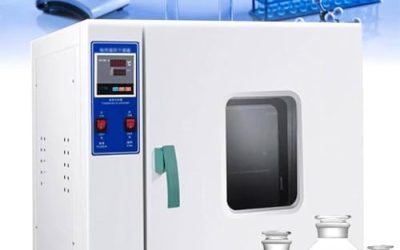
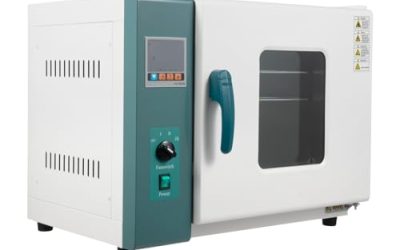
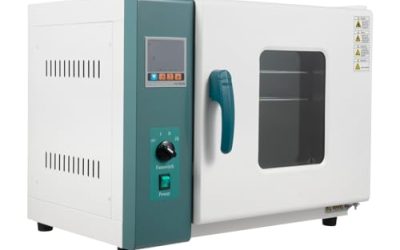
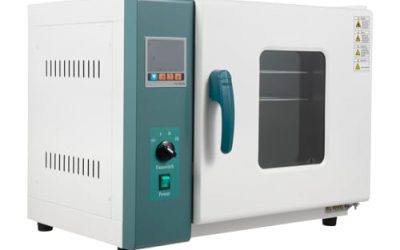
The YANDDEA 42-litre oven is the clearest upgrade pick for a lab moving from analog control to digital PID control. It uses a digital PID controller with a stated range of 50 to 300 degrees Celsius and timing up to 9999 minutes. The 50-degree lower limit is stated directly, which makes it easy to plan gentle drying steps, and the long timer supports overnight and extended conditioning runs that an older oven without a timer could not handle.
Forced-air convection is designed to distribute heat through the chamber, and the galvanized steel body with an electrostatic spray shell is built to resist corrosion from repeated heating. At 39.6 pounds, it is lighter than the 45-litre forced-air model below, so installation on an existing bench is simpler.
This oven suits a lab whose main upgrade goal is control: steadier temperatures, a readable digital set point, and a real timer. A limitation to plan around is documentation: confirm the shelf count, shelf load limit, and calibration steps in the manual on arrival, and run a temperature check with a reference thermometer before the oven takes over routine work from the old unit.
2. SODONAD 45L Horizontal Electric Blast Drying Oven, Model 101-0AB

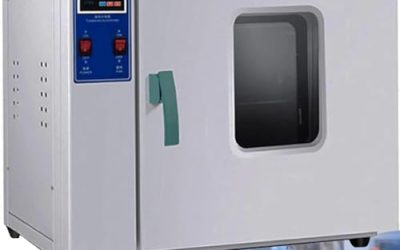
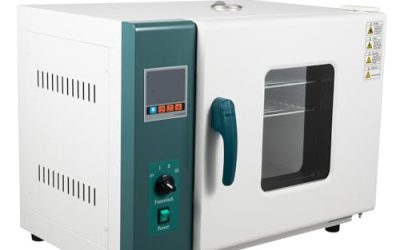
The SODONAD 45-litre oven is the upgrade pick when capacity is the main problem. It is a forced-air convection oven rated at 110 volts and 1000 watts, with a temperature range from room temperature plus 10 degrees Celsius to 300 degrees Celsius, or room temperature plus 18 degrees Fahrenheit to 572 degrees Fahrenheit. The listing states a temperature fluctuation of plus or minus 1 degree Celsius and a temperature resolution of 0.1 degrees Celsius.
Two adjustable trays, each rated to 15 kilograms, hold a full batch that a smaller oven would split across runs. A large double-layer tempered glass observation window lets an operator check the load without opening the door. Heat dissipation holes and a top drainage hole help moist air leave the chamber during drying.
This oven suits a lab that has outgrown a small oven and needs to dry full batches in one run. The limitation is size and weight: at 71 pounds, with external dimensions of 46.5 by 65 by 49.5 centimetres, it needs a sturdy bench and a permanent position. Measure the bench and the door swing before ordering, and plan for a fixed home rather than a shared trolley.
3. Microyn 18L Digital Bench-Top Gravity Convection Drying Oven, Model MT-WHL-25AB

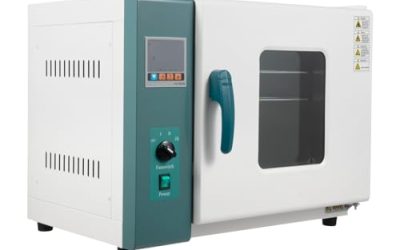
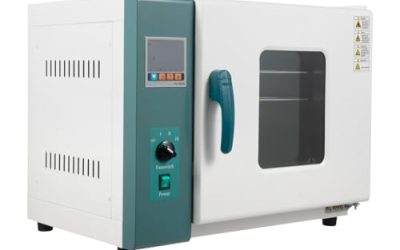
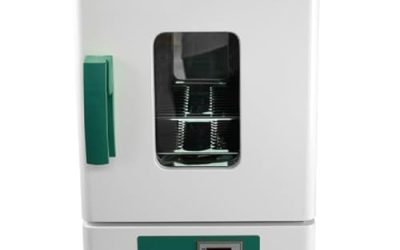
The Microyn 18-litre oven is the compact upgrade for a bench that needs digital control without a large new footprint. It is a gravity convection oven rated at 600 watts and 110 volts, with a temperature range from room temperature plus 10 degrees Celsius to 300 degrees Celsius, controlled by a PID micro-computer controller with over-temperature protection. The inner chamber measures 260 by 260 by 260 millimetres, and the unit includes two shelves, each rated to 15 kilograms, plus a viewing window.
For a lab replacing a small analog oven, this model keeps the same bench footprint while adding a digital display, PID control, over-temperature protection, and a programmable timer to 9999 minutes. Gravity convection has no fan to maintain, and the viewing window lets an operator check samples without opening the door.
This oven suits a small bench, a single-method workflow, or a lab that needs a second oven alongside a larger unit. The limitation is capacity: 18 litres will not fix a split-batch problem, so choose it only when control, not size, is the weakness being fixed. Keep loads light and spaced apart for even heating.
Comparison Table
| Product | Key Features | Best For |
|---|---|---|
| YANDDEA 42L Laboratory Drying Oven | 42L forced-air convection, digital PID control, 50 to 300 degrees C, timer up to 9999 minutes, galvanized steel body | Upgrading from analog control to digital PID control |
| SODONAD 45L, Model 101-0AB | 45L forced-air convection, 110V, 1000W, RT+10 to 300 degrees C, plus or minus 1 degree C fluctuation, 0.1 degree C resolution, 2 trays at 15 kg each, observation window | Upgrading to larger batch capacity |
| Microyn 18L, Model MT-WHL-25AB | 18L gravity convection, 600W, 110V, RT+10 to 300 degrees C, PID control, over-temperature protection, 2 shelves at 15 kg each, viewing window | Compact digital upgrade on a small bench |
Frequently Asked Questions
When is it time to upgrade a laboratory drying oven?
Upgrade when the old oven causes repeated runs, split batches, uncertain temperatures, or extra manual work. A faulty thermostat, a damaged door seal, uneven heating that cannot be corrected, or a chamber that no longer fits the workload are all clear signs that replacement is due.
What is the biggest improvement in a modern drying oven?
For most labs, the move from an analog dial to a digital PID controller is the biggest step. It gives a readable set point, steadier temperature control, a timer, and often a calibration function, all of which make results easier to repeat and easier to document.
Should the new oven be larger than the old one?
Only if split batches are part of the problem. If the old chamber already fits the batch, a larger oven adds bench load without fixing anything. If batches are routinely split, choose a chamber that holds one full batch with room for air to move.
Conclusion
For laboratory upgrades, the best laboratory drying ovens for laboratory upgrades are the ones that fix the specific weakness in the oven being replaced. The YANDDEA 42-litre oven is the strongest pick when the goal is digital PID control and a real timer. The SODONAD 45-litre oven is the right choice when capacity is the problem, with two heavy-duty trays and forced-air convection for full batches. The Microyn 18-litre oven is the compact digital upgrade for a small bench where control, not size, needs fixing. Start from the weakness, measure the bench, and validate the new oven with a reference thermometer before it takes over routine work.
Disclosure: As an Amazon Associate, we may earn from qualifying purchases.
More from Amazon
Programs that pair well with the guide above. Offers and eligibility are set by Amazon and may change.
Collect the home and kitchen items you want in one registry that guests can shop from.
Create a wedding registrySet up recurring deliveries of everyday items on eligible products. Terms and savings are set by Amazon.
Explore Subscribe & SaveFree shipping on eligible items, Prime Video and more. Eligible new members can start with a free trial.
Start a Prime free trialAudiobooks and podcasts to listen to on the go. Eligible new members can start with a free trial.
Try Audible freeAs an Amazon Associate we earn from qualifying purchases.