Key takeaways
- Find the best laboratory drying ovens with PID temperature control for research laboratories, with steady temperatures and repeatable drying cycles.
The best laboratory drying ovens with PID temperature control for research laboratories are built around one capability: holding a set temperature steadily enough that an experiment can be repeated. In research, drying is rarely the headline step, but it shapes everything after it. A sample dried at a stable temperature, for a defined time, on the same shelf position, gives comparable material for the next stage. A sample dried with overshoot at the start of the run, or with a slow drift across a long cycle, introduces a variable that is hard to trace later. PID control exists to reduce that variable.
PID stands for proportional, integral, and derivative control. In practical terms, a PID controller watches the difference between the set temperature and the chamber temperature and adjusts heater output continuously, rather than switching the heater fully on and fully off. As the chamber approaches the set point, the controller reduces power so the temperature settles without a large overshoot. That behaviour matters most in research, where a method may call for a precise temperature held for hours.
How to Choose a PID Drying Oven for Research
Understand what PID control actually does
A PID controller has three parts working together: the proportional part responds to the current error, the integral part corrects a persistent small error over time, and the derivative part dampens the response so the temperature does not swing past the set point. The result, when the controller is set up well, is a chamber that reaches the set point smoothly and holds it with a small fluctuation. Look for a listing that names PID control explicitly and states a temperature fluctuation figure, such as plus or minus 1 degree Celsius, and a temperature resolution, such as 0.1 degrees Celsius.
Check the stated stability figures, then verify them
Stated figures are a starting point, not a guarantee for your lab. A fluctuation of plus or minus 1 degree Celsius and a resolution of 0.1 degrees Celsius are useful benchmarks for research drying. A calibration function lets you align the display with a reference thermometer, and an over-temperature alarm protects the run if a set point is entered incorrectly. Before the oven is used for research samples, run it empty and loaded at your usual set points and record the chamber temperature at several positions with a reference thermometer.
Match the temperature range to the protocol
Research protocols vary widely. Gentle drying may call for 50 or 60 degrees Celsius, routine drying may call for 100 to 150 degrees Celsius, and heat treatment may call for 250 or 300 degrees Celsius. A range from 50 degrees Celsius, or from room temperature plus 10 degrees Celsius, up to 300 degrees Celsius covers most research drying. Check the low end carefully, because a lower limit stated as room temperature plus a margin changes with the season and the room. Choose a range with margin below and above your usual set points.
Capacity, shelves, and bench fit
A research oven should hold one full experimental batch at a time, with containers in a single layer and gaps for air flow. Check the number of shelves, the load limit per shelf, and the internal height for the tallest containers. A 42-litre or 45-litre chamber suits larger batches, while an 18-litre chamber suits a small, dedicated protocol. Check the external dimensions, the weight, the voltage, and the power draw before ordering, and leave clearance around the unit for ventilation.
Product Picks
1. YANDDEA 42L Laboratory Drying Oven

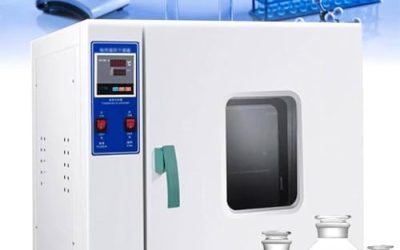
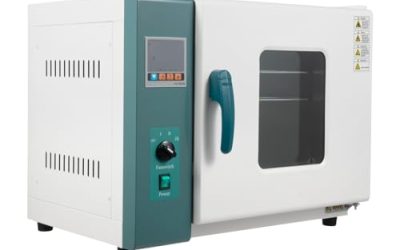
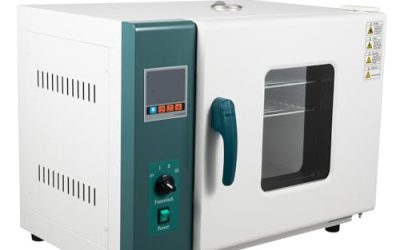
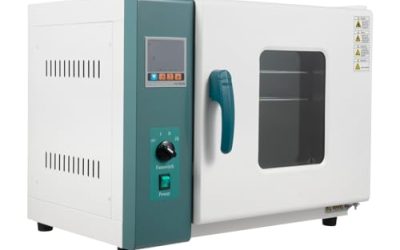
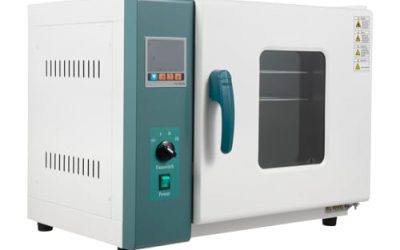
The YANDDEA 42-litre oven is the most direct PID pick for a research lab. It is built around a digital PID controller with a stated range of 50 to 300 degrees Celsius and timing up to 9999 minutes. The listing describes the PID controller as giving precise temperature stability across that range, and it names timing, alarm, and temperature calibration functions as part of the control system. For a research group, that combination of PID control, a defined low end of 50 degrees Celsius, and a very long timer is the feature set that matters most.
This oven suits a research lab that runs long, timed drying cycles and gentle low-temperature steps under PID control. A limitation to plan around is documentation: confirm the shelf count, shelf load limit, and calibration steps in the manual on arrival, and run a temperature mapping check with a reference thermometer at your protocol temperatures before the oven is used for research samples.
2. Microyn 18L Digital Bench-Top Gravity Convection Drying Oven, Model MT-WHL-25AB

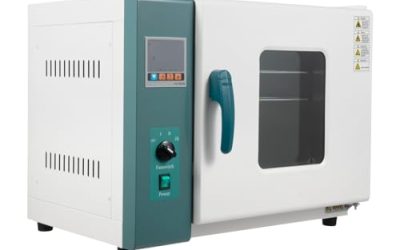
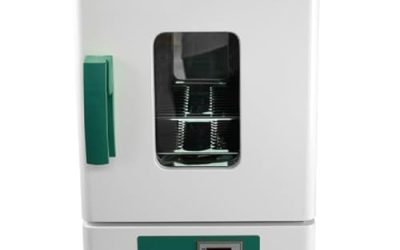
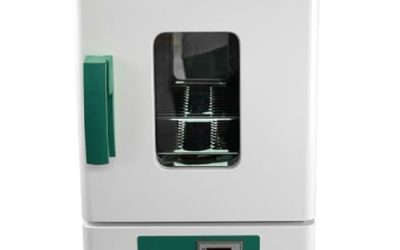
The Microyn 18-litre oven is the compact PID pick for a research bench with limited space or for a single protocol that needs its own oven. It is a gravity convection oven rated at 600 watts and 110 volts, with a temperature range from room temperature plus 10 degrees Celsius to 300 degrees Celsius, controlled by a PID micro-computer intelligent temperature controller with over-temperature protection. The inner chamber measures 260 by 260 by 260 millimetres, and the unit includes two shelves, each rated to 15 kilograms, plus a viewing window.
Gravity convection has no fan to maintain, and in a chamber this small the natural movement of heated air can give even results when loads are light and spaced apart. The PID controller is the key feature for research use: it holds the set temperature steadily and reduces the overshoot that a simple thermostat would allow at the start of a run. The programmable timer runs to 9999 minutes for long drying steps.
This oven suits a small research group, a single-method protocol, or a lab that needs a dedicated PID oven beside a larger general-purpose unit. The limitation is capacity: 18 litres will not hold a large batch, and gravity convection is more sensitive to crowded loading than forced air. Keep containers in a single layer with clear gaps and validate uniformity before relying on it for a protocol.
3. SODONAD 45L Horizontal Electric Blast Drying Oven, Model 101-0AB

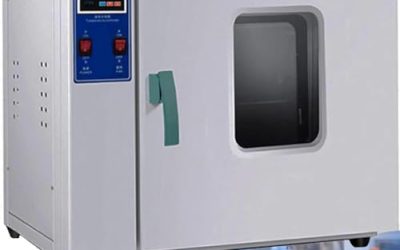
The SODONAD 45-litre oven is the large-batch PID-related pick for research labs that need capacity as well as steady control. It is a forced-air convection oven rated at 110 volts and 1000 watts, with a temperature range from room temperature plus 10 degrees Celsius to 300 degrees Celsius, or room temperature plus 18 degrees Fahrenheit to 572 degrees Fahrenheit. The listing states a temperature fluctuation of plus or minus 1 degree Celsius and a temperature resolution of 0.1 degrees Celsius, with an intelligent temperature controller and a digital display.
Two adjustable trays, each rated to 15 kilograms, hold a full research batch in one run. A large double-layer tempered glass observation window lets a researcher check the load without opening the door. Heat dissipation holes and a top drainage hole help moist air leave the chamber during drying. The cold plate and stainless steel construction suits repeated use with research samples and glassware.
This oven suits a research lab that dries larger batches and needs forced-air evenness across two shelves. The limitation is size and weight: at 71 pounds, with external dimensions of 46.5 by 65 by 49.5 centimetres, it needs a sturdy bench and a fixed home. Note that the listing describes an intelligent temperature controller rather than naming PID control explicitly, so a research group that needs documented PID control should treat the YANDDEA or Microyn models above as the primary PID picks.
Comparison Table
| Product | Key Features | Best For |
|---|---|---|
| YANDDEA 42L Laboratory Drying Oven | 42L forced-air convection, digital PID control, 50 to 300 degrees C, timer up to 9999 minutes, alarm and calibration functions, galvanized steel body | Long research cycles under PID control |
| Microyn 18L, Model MT-WHL-25AB | 18L gravity convection, 600W, 110V, RT+10 to 300 degrees C, PID micro-computer control, over-temperature protection, 2 shelves at 15 kg each, viewing window | Compact PID oven for a single research protocol |
| SODONAD 45L, Model 101-0AB | 45L forced-air convection, 110V, 1000W, RT+10 to 300 degrees C, plus or minus 1 degree C fluctuation, 0.1 degree C resolution, 2 trays at 15 kg each, observation window | Large research batches with forced-air evenness |
Frequently Asked Questions
What does PID temperature control do in a drying oven?
A PID controller adjusts heater output continuously based on the difference between the set temperature and the chamber temperature. It reduces power as the chamber approaches the set point, which limits overshoot and helps hold a steady temperature during a long run.
Is PID control necessary for research drying?
It is strongly recommended when a protocol depends on a precise, repeatable temperature. A simple thermostat can overshoot at the start of a run and drift during a long cycle, which adds a variable to the experiment. PID control reduces that variable, though it does not replace a temperature check with a reference thermometer.
How do I verify PID performance in my lab?
Run the oven empty and loaded at your protocol temperatures. Record the chamber temperature at several shelf positions with a calibrated reference thermometer, note the time to reach the set point, and note any overshoot. Keep that record with the protocol and repeat the check after the oven is moved or serviced.
Conclusion
For research laboratories, the best laboratory drying ovens with PID temperature control for research laboratories are the ones that hold a set temperature steadily, run long timed cycles, and let the same protocol be repeated. The YANDDEA 42-litre oven is the strongest PID pick, with digital PID control from 50 to 300 degrees Celsius and a timer to 9999 minutes. The Microyn 18-litre oven is the compact PID option for a single protocol or a small research bench. The SODONAD 45-litre oven adds large-batch forced-air capacity with a stated fluctuation of plus or minus 1 degree Celsius. Whichever model you choose, validate the chamber with a reference thermometer at your protocol temperatures before research samples go inside.
Disclosure: As an Amazon Associate, we may earn from qualifying purchases.
More from Amazon
Programs that pair well with the guide above. Offers and eligibility are set by Amazon and may change.
Collect the home and kitchen items you want in one registry that guests can shop from.
Create a wedding registrySet up recurring deliveries of everyday items on eligible products. Terms and savings are set by Amazon.
Explore Subscribe & SaveFree shipping on eligible items, Prime Video and more. Eligible new members can start with a free trial.
Start a Prime free trialAudiobooks and podcasts to listen to on the go. Eligible new members can start with a free trial.
Try Audible freeAs an Amazon Associate we earn from qualifying purchases.