Key takeaways
- Find the best laboratory drying ovens for sample preparation, with even heating, useful capacity, and steady control for drying samples before analysis.
The best laboratory drying ovens for sample preparation are chosen for what happens to the sample, not for the oven alone. Drying is often the first step before weighing, grinding, extraction, or analysis, and any uneven drying at this stage carries through to every result that follows. A sample that is damp in the centre, overheated at the edge, or dried at a different temperature from the last batch will not behave the same way in the next step. That is why even heating, a stable set temperature, and a chamber that fits the whole batch matter so much in sample preparation.
Sample preparation also covers many different materials: soils and sediments, plant tissue, food and feed samples, powders, and containers that need to be dry before a sensitive weighing. Each material has its own drying temperature and time, and some need gentle heat to avoid changing the sample. A good preparation oven gives the operator a clear temperature range, a timer that can be set precisely, and shelves that hold the containers in a single layer with air moving around them.
How to Choose a Drying Oven for Sample Preparation
Even heating across the whole batch
The most important feature for sample preparation is temperature uniformity. A forced-air convection oven circulates heated air through the chamber and usually gives more even results across shelves than still air, especially when the chamber is full. In a gravity convection oven, even heating depends more on load placement, so keep containers in a single layer, leave gaps between them, and avoid stacking. Whichever type you choose, place a reference thermometer at different shelf positions during a trial run to learn where the warm and cool spots are.
A temperature range that suits the sample
Many samples dry well between 60 and 120 degrees Celsius, while others need 150 degrees Celsius or more, and some heat-sensitive materials need gentle drying near 50 degrees Celsius. A range from 50 or room temperature plus 10 degrees Celsius up to 300 degrees Celsius covers most preparation methods. Check the low end carefully: a method that calls for 60 degrees Celsius is hard to run on an oven whose lowest stable set point is close to that value on a warm day. Choose an oven with margin below and above your usual methods.
Capacity, shelves, and container fit
Count the containers in a typical preparation batch and measure the tallest one. A 45-litre chamber with two adjustable trays can hold a full batch of sample dishes or beakers, while an 18-litre chamber suits a small set of samples for one analysis run. Check the load limit per shelf: trays rated to 15 kilograms each handle heavy glassware and wet soils without bending. Adjustable shelves help when tall containers and flat dishes share the same run.
Control stability and a usable timer
A digital PID controller holds the set temperature with less overshoot than a simple thermostat, which protects heat-sensitive samples from a temperature spike at the start of a run. A timer that runs to 9999 minutes lets a long drying step finish at a defined time, including overnight drying. Record the set temperature, the time, and the shelf position for each batch so the preparation step can be repeated exactly.
Cleaning between sample types
Samples change from batch to batch, so the chamber needs to be easy to clean. A stainless steel or galvanized steel interior and removable shelves make it simple to wipe out residue before the next material goes in. Clean the chamber after wet or dusty samples, and do not dry volatile or flammable materials in a standard drying oven.
Product Picks
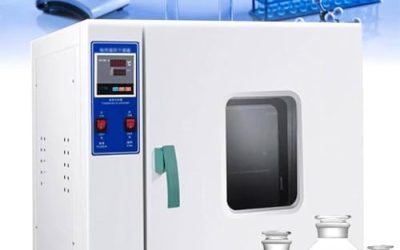
1. SODONAD 45L Horizontal Electric Blast Drying Oven, Model 101-0AB

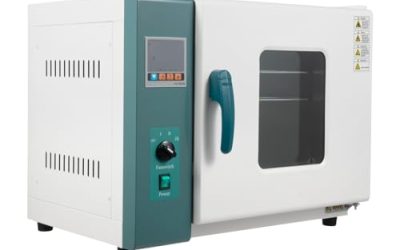
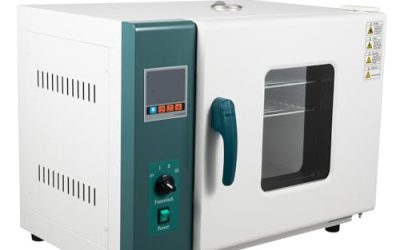
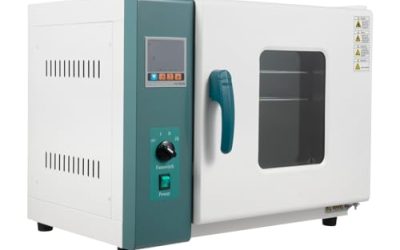
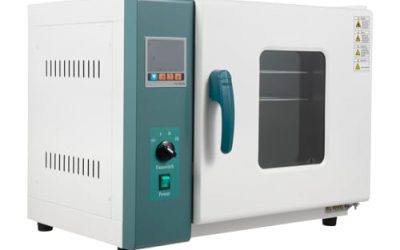
The SODONAD 45-litre oven is the strongest pick for sample preparation at batch scale. It is a forced-air convection oven rated at 110 volts and 1000 watts, with a temperature range from room temperature plus 10 degrees Celsius to 300 degrees Celsius, or room temperature plus 18 degrees Fahrenheit to 572 degrees Fahrenheit. The listing states a temperature fluctuation of plus or minus 1 degree Celsius and a temperature resolution of 0.1 degrees Celsius, which helps keep each batch at the same conditions as the last.
Two adjustable trays, each rated to 15 kilograms, hold a full preparation batch in one run. A large double-layer tempered glass observation window lets an operator check samples without opening the door and disturbing the chamber. Heat dissipation holes and a top drainage hole help moist air leave during drying, which supports even drying across the load.
This oven suits a lab that prepares samples in batches for weighing or analysis and needs the whole batch dried under the same conditions. The limitation is footprint and weight: at 71 pounds, it needs a sturdy bench and a fixed position. Plan the loading layout before the first run, with containers in a single layer and gaps between them for air flow.
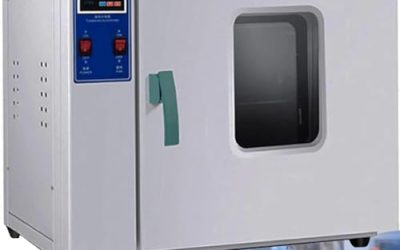
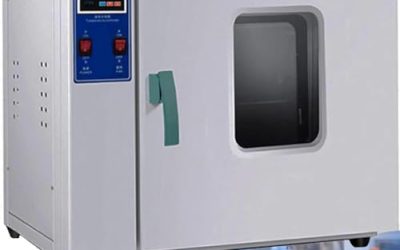
2. YANDDEA 42L Laboratory Drying Oven

The YANDDEA 42-litre oven is a useful alternative for sample preparation, built around a digital PID controller with a stated range of 50 to 300 degrees Celsius and timing up to 9999 minutes. The 50-degree lower limit is stated directly, which makes it easy to plan gentle drying steps for heat-sensitive samples. Forced-air convection is designed to distribute heat through the chamber, and the galvanized steel body with an electrostatic spray shell is built to resist corrosion from repeated heating.
At 42 litres, capacity is close to the SODONAD, so it handles a similar batch size, while its weight of 39.6 pounds makes it easier to position on the bench during installation. The long timer range supports overnight drying and long conditioning steps that end at a defined time rather than by manual switch-off.
This oven suits a preparation bench that runs long drying cycles and gentle low-temperature steps. A limitation to plan around is documentation: confirm the shelf count, shelf load limit, and calibration steps in the manual on arrival, and run a trial batch with a reference thermometer at each shelf before using it for samples that feed into reportable analysis.
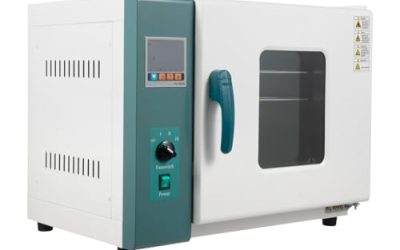
3. Microyn 18L Digital Bench-Top Gravity Convection Drying Oven, Model MT-WHL-25AB

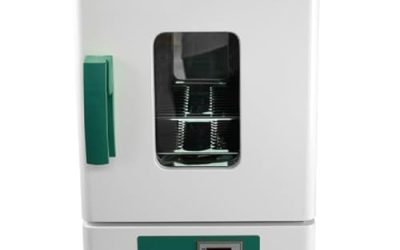
The Microyn 18-litre oven is the compact option for small preparation batches. It is a gravity convection oven rated at 600 watts and 110 volts, with a temperature range from room temperature plus 10 degrees Celsius to 300 degrees Celsius, controlled by a PID micro-computer controller with over-temperature protection. The inner chamber measures 260 by 260 by 260 millimetres, and the unit includes two shelves, each rated to 15 kilograms, plus a viewing window.
In a chamber this small, gravity convection can give even results when the load is light and well spaced. The PID controller holds the set temperature steadily, and the timer runs to 9999 minutes for long drying steps. The viewing window lets an operator check samples without opening the door, which is helpful when a sample needs to reach a defined dryness before the next step.
This oven suits a small preparation bench, a single-method workflow, or a lab that needs a dedicated oven for one sample type. The limitation is capacity: 18 litres will not hold a large batch, and crowded loading will reduce uniformity in a gravity convection chamber. Keep containers in a single layer with clear gaps and validate the run with a reference thermometer.
Comparison Table
| Product | Key Features | Best For |
|---|---|---|
| SODONAD 45L, Model 101-0AB | 45L forced-air convection, 110V, 1000W, RT+10 to 300 degrees C, plus or minus 1 degree C fluctuation, 0.1 degree C resolution, 2 trays at 15 kg each, observation window, drainage hole | Full preparation batches |
| YANDDEA 42L Laboratory Drying Oven | 42L forced-air convection, digital PID control, 50 to 300 degrees C, timer up to 9999 minutes, galvanized steel body | Long drying cycles and gentle low-temperature steps |
| Microyn 18L, Model MT-WHL-25AB | 18L gravity convection, 600W, 110V, RT+10 to 300 degrees C, PID control, over-temperature protection, 2 shelves at 15 kg each, viewing window | Small preparation batches and single-method work |
Frequently Asked Questions
What temperature should samples be dried at?
It depends on the material and the method. Many samples dry between 60 and 120 degrees Celsius, while some need 150 degrees Celsius or more. Always follow the written method for the analysis, and do not raise the temperature to speed up drying unless the method allows it, because overheating can change the sample.
How do I get even drying across a batch?
Load containers in a single layer, leave gaps between them, and use the same shelf positions for every batch. Forced-air convection helps evenness in a full chamber. Run a trial with a reference thermometer at different positions to find warm and cool spots before relying on the oven for analysis samples.
Can I dry very wet samples in a standard drying oven?
Yes, provided the material is not volatile or flammable and the method allows oven drying. Spread wet samples thinly, leave the vent path clear, and allow enough time for moisture to leave the chamber. A crowded, deep load will dry unevenly and take far longer.
How long should sample drying take?
Drying time depends on the material, the moisture content, the load size, and the temperature. Follow the method, weigh a trial sample before and after drying, and record the time that gives a stable weight. Do not assume that a longer run is always better, because some samples change if they are held at heat for too long.
Conclusion
For sample preparation, the best laboratory drying ovens for sample preparation are the ones that dry every container in the batch under the same conditions. The SODONAD 45-litre oven is the strongest pick for full batches, with forced-air convection and two heavy-duty trays. The YANDDEA 42-litre oven suits long cycles and gentle low-temperature drying with its PID control and 50-degree lower limit. The Microyn 18-litre oven is the right choice for small batches and single-method work. Whichever model you choose, load in a single layer, leave gaps for air flow, and validate the run with a reference thermometer before the samples move to analysis.
Disclosure: As an Amazon Associate, we may earn from qualifying purchases.
More from Amazon
Programs that pair well with the guide above. Offers and eligibility are set by Amazon and may change.
Collect the home and kitchen items you want in one registry that guests can shop from.
Create a wedding registrySet up recurring deliveries of everyday items on eligible products. Terms and savings are set by Amazon.
Explore Subscribe & SaveFree shipping on eligible items, Prime Video and more. Eligible new members can start with a free trial.
Start a Prime free trialAudiobooks and podcasts to listen to on the go. Eligible new members can start with a free trial.
Try Audible freeAs an Amazon Associate we earn from qualifying purchases.