Key takeaways
- Find the best benchtop drying ovens for laboratory upgrades, with modern PID control, forced-air uniformity, and 110V benchtop convenience.
The best benchtop drying ovens for laboratory upgrades replace aging equipment with something measurably better: steadier temperature control, more even heat, clearer displays, and safety functions that older analog ovens never had. Many labs still run ovens with dial thermostats, no timer, and no alarm. Those units work until they do not, and when they drift, the first sign is often a batch of ruined samples.
An upgrade is also a chance to fix old frustrations. Perhaps the old oven is too small for current batch sizes, or too large for the bench it occupies, or its temperature varies from shelf to shelf. The three benchtop models below cover the common upgrade paths: a direct 110V replacement with modern PID control, a capacity step up for growing workloads, and a compact modern oven for a bench that needs its space back.
How to Choose a Benchtop Drying Oven for a Laboratory Upgrade
Begin with what the old oven got wrong
List the problems before shopping. Common complaints include temperature drift, uneven drying, no timer, a broken door seal, a chamber that is hard to clean, or a size that no longer matches the workload. The replacement should solve those specific problems, not simply repeat the old specification.
PID control instead of a dial thermostat
The single biggest improvement in a modern benchtop oven is the controller. A digital PID controller holds the set temperature with small fluctuations and shows the actual chamber temperature on a display. Look for timing, an over-temperature alarm, temperature deviation correction, and a calibration function.
Forced air versus gravity convection
Forced-air convection circulates heated air and gives more uniform results across shelves, which is the right upgrade when the old oven dried unevenly. Gravity convection heats gently without a fan and suits light samples, films, and powders. If the old oven was a still-air model and drying was uneven, forced air is usually the fix.
Capacity: match the current workload, not the old oven
Workloads change. Measure the largest batch the lab runs now, including trays and racks. An 18-liter chamber suits small daily loads. A 45-liter chamber with two trays covers routine batches. A 70-liter chamber suits labs whose batch sizes have grown beyond a compact oven. Avoid buying the same size out of habit.
Chamber material and window
A stainless steel interior resists corrosion and cleans easily, which matters when the old chamber is stained or pitted. A tempered glass observation window lets staff check loads without opening the door, a small convenience that older ovens often lack.
Power, size, and bench fit
Confirm the voltage on the listing matches the lab supply. Measure the bench depth, width, and weight capacity before ordering: a 45-liter oven can weigh more than 70 pounds, and a 70-liter unit needs a deep, sturdy bench with clearance for ventilation. Plan for two people to move the larger models.
Plan the changeover
When the new oven arrives, verify its temperature against a calibrated reference thermometer at the temperatures the lab uses most. Update the written procedure with the new set points and cycle times, and keep the old oven until the new one has completed a few successful runs.
Our Top Picks
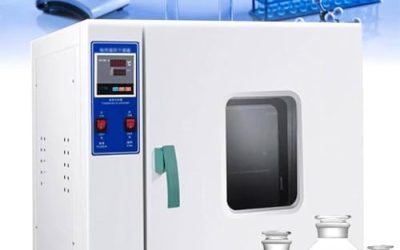
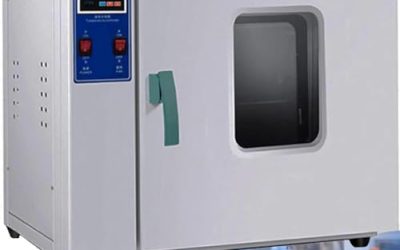
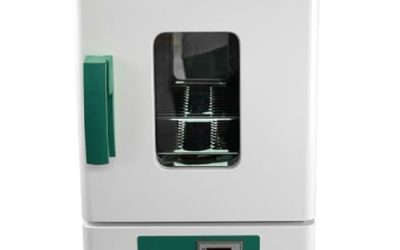
1. SODONAD 101-0AB 45L Horizontal Electric Blast Drying Oven

The SODONAD 101-0AB is the most straightforward upgrade for most labs. It replaces an analog oven with a digital PID controller that includes timing, an over-temperature alarm, temperature deviation correction, and a self-tuning function. The temperature range runs from room temperature plus 10°C to 300°C (572°F), and forced-air convection evens out the shelf-to-shelf variation that plagues older still-air ovens.
Its 45-liter chamber holds two adjustable trays rated to 33 pounds each, and the stainless steel liner and double-layer tempered glass observation window are easy to clean and inspect. It runs on 110V at 1000W, so it drops into a standard bench outlet without electrical work.
Best for: Labs replacing an aging analog oven with a modern, mid-size forced-air unit.
Keep in mind: At 46.5 x 65 x 49.5 cm and 71 pounds, it is larger and heavier than many older compact ovens. Measure the bench and arrange two people for installation.
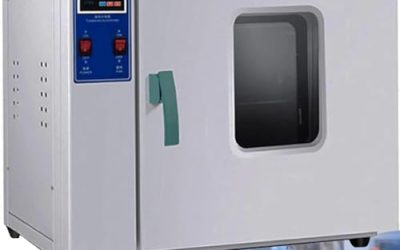
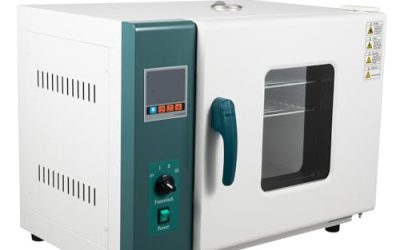
2. YANDDEA Laboratory Drying Oven, 70L

The YANDDEA laboratory drying oven is the capacity upgrade. Its PID controller covers 50 to 300°C with listed accuracy of 0.1°C, and forced-air convection keeps the larger chamber uniform across two trays rated to 15 kg each. A microcomputer timer, alarm functions, and temperature calibration support repeatable cycles, and the galvanized steel body has a corrosion-resistant electrostatic spray finish.
The listing presents several capacities from 15.6L to 136L; the 70L size is the practical step up for a lab whose batches have outgrown a 45-liter oven but that still wants a benchtop unit rather than a floor-standing one.
Best for: Labs whose batch sizes have grown and need more chamber volume in the same benchtop footprint class.
Keep in mind: Confirm the capacity and voltage option selected on the listing before ordering. A 70L chamber needs a deep, strong bench, and the larger load takes longer to heat through, so allow time for the chamber to stabilize.
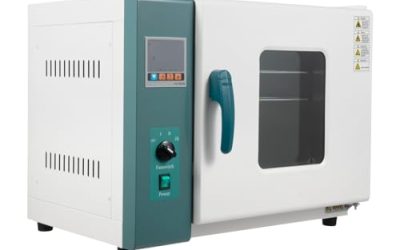
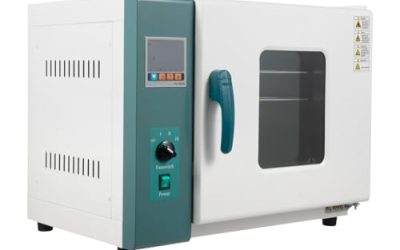
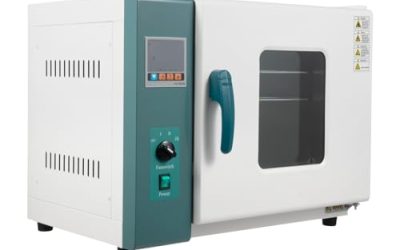
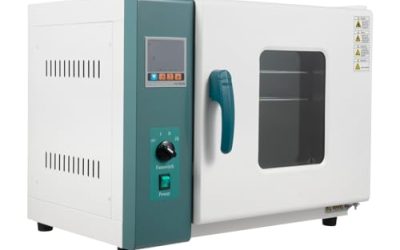
3. Microyn Digital Bench-top Compact Drying Oven, 18L

The Microyn MT-WHL-25AB is the upgrade for a bench that needs its space back. Its 18-liter (0.63 cu ft) chamber uses gravity convection and a digital constant-temperature controller covering room temperature plus 10°C to 300°C. Two shelves and a viewing window come with the oven, and the 600W, 110V design runs from a standard bench outlet.
At 380 x 455 x 568 mm, it fits where a bulky older oven cannot, and its gentle natural airflow suits light samples and small daily loads. It is a sensible replacement when the old oven was oversized for the work actually being done.
Best for: Labs downsizing an oversized oven or adding a second, dedicated oven to a crowded bench.
Keep in mind: Gravity convection is gentler than forced air, so full loads need careful spacing. The 18-liter chamber cannot absorb a growing batch size, so confirm the workload before choosing the compact route.
Comparison Table
| Model | Capacity | Temperature Range | Key Feature | Best For |
|---|---|---|---|---|
| SODONAD 101-0AB | 45L | RT+10 to 300°C | Forced-air PID control with alarm | Direct analog oven replacement |
| YANDDEA Laboratory Drying Oven | 70L | 50 to 300°C | PID control, 0.1°C listed accuracy | Capacity step up |
| Microyn MT-WHL-25AB | 18L | RT+10 to 300°C | Compact gravity convection | Reclaiming bench space |
FAQ
What is the biggest improvement in a modern benchtop drying oven?
The controller. A digital PID controller holds temperature far more steadily than an old dial thermostat, and it adds a timer, an over-temperature alarm, and a calibration function that older ovens lack.
Should I replace an oven with the same size?
Not automatically. Measure the largest batch the lab runs now. If batches have grown, step up in capacity. If the old oven was oversized for the actual work, a compact model frees bench space and warms up faster.
Do I need electrical work to install a new benchtop oven?
Most benchtop models in this guide run on 110V from a standard bench outlet. Always confirm the voltage on the listing, and confirm the bench circuit can carry the wattage before ordering.
How do I verify a new oven before putting it into service?
Check the chamber temperature against a calibrated reference thermometer at the temperatures the lab uses most, run a few typical loads, and record the results. Update the written procedure with the new set points and times.
Can I keep the old oven as a backup?
Yes, if bench space allows and the old oven still holds temperature safely. Many labs keep the old unit for overflow loads during the changeover, then retire it once the new oven has proven itself over several weeks.
Conclusion
A laboratory upgrade should fix a real problem, and for most labs that problem is temperature control. The SODONAD 101-0AB 45L is the most complete single upgrade, combining PID control, forced-air uniformity, and a practical mid-size chamber. The YANDDEA 70L answers growing batch sizes, while the Microyn 18L reclaims bench space when the old oven was bigger than the work required. Before ordering, measure the bench, confirm the voltage, and verify the new oven against a calibrated reference. A careful changeover turns a simple replacement into a lasting improvement in how the lab works.
Disclosure: As an Amazon Associate, we may earn from qualifying purchases.
More from Amazon
Programs that pair well with the guide above. Offers and eligibility are set by Amazon and may change.
Collect the home and kitchen items you want in one registry that guests can shop from.
Create a wedding registrySet up recurring deliveries of everyday items on eligible products. Terms and savings are set by Amazon.
Explore Subscribe & SaveFree shipping on eligible items, Prime Video and more. Eligible new members can start with a free trial.
Start a Prime free trialAudiobooks and podcasts to listen to on the go. Eligible new members can start with a free trial.
Try Audible freeAs an Amazon Associate we earn from qualifying purchases.