Key takeaways
- Find the best benchtop drying ovens for product development, with PID control, even heat, and capacities sized for prototype batches.
The best benchtop drying ovens for product development turn a workbench into a small, controlled test environment. When a new material, coating, adhesive, or component is still being refined, drying conditions can change the outcome as much as the formulation itself. An oven that holds a steady temperature, heats evenly from shelf to shelf, and repeats the same cycle day after day lets a development team trust its results instead of second-guessing them.
Product development work is different from routine production drying. Batches are small, recipes change often, and a single failed run can cost a week of work. That means the oven has to be flexible enough for experiments and stable enough for comparisons. The picks below focus on benchtop models with digital control, useful temperature ranges, and chambers that fit real prototype loads.
How to Choose a Benchtop Drying Oven for Product Development
Temperature range and stability
Most development drying, curing, and heat-treatment work happens between room temperature and 300°C. Look for an oven that reaches at least 250°C, with a controller that holds the set point without wide swings. PID control is the feature to look for here: it adjusts heater output continuously instead of switching fully on and off, which keeps the chamber closer to the target temperature.
Temperature uniformity
A prototype placed near the door should dry the same way as one placed at the back. Forced-air convection, where a fan circulates heated air through the chamber, generally gives more even results across shelves than still air. If the work involves delicate films or powders that could be disturbed by moving air, a gravity-convection model with gentle natural airflow may be the better match.
Capacity matched to prototype batches
Development batches are usually small, but they still need room. An 18-liter chamber suits single trays of samples and small parts. A 45-liter chamber handles several trays at once, which matters when a team is comparing multiple formulations in one run. Going larger than needed wastes bench space and warm-up time, so match the chamber to the largest batch you expect to run regularly.
Timer, alarm, and calibration functions
Development work runs on schedules. A programmable timer that ends a cycle automatically, an over-temperature alarm, and a temperature calibration function all help keep experiments consistent. Calibration matters most when results will be compared across weeks or shared with another lab.
Chamber material and observation window
A stainless steel interior resists corrosion from solvents and residues and is easy to wipe down between formulations. A tempered glass observation window lets the team check on a cure or a drying sample without opening the door and disturbing the temperature.
Power and bench requirements
All of the ovens below are benchtop models designed for a standard laboratory bench. Confirm the voltage listed on the product page matches your lab supply, and check the external dimensions and weight against the bench. A 45-liter oven can weigh more than 70 pounds, so it needs a sturdy bench and two people to position safely. Leave clearance around the unit for ventilation, as the manufacturer recommends.
Our Top Picks
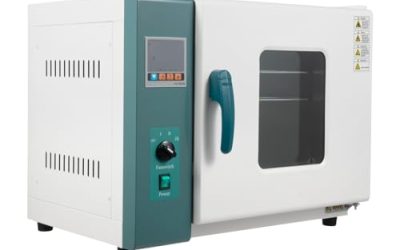
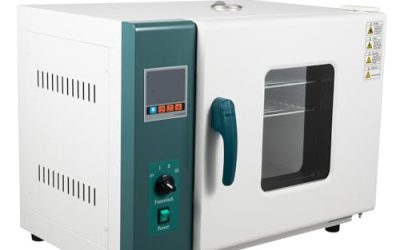
1. SODONAD 101-0AB 45L Horizontal Electric Blast Drying Oven

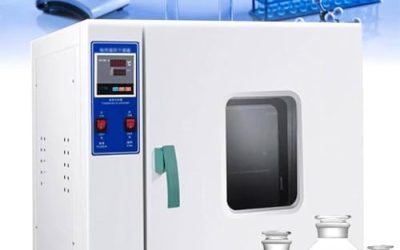
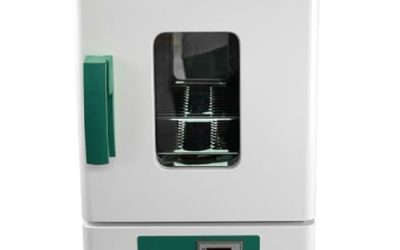
The SODONAD 101-0AB is the most versatile pick for a product development bench. Its 45-liter chamber holds two adjustable trays, each rated to 33 pounds, so a team can dry several prototype variants side by side in a single run. The temperature range runs from room temperature plus 10°C up to 300°C (572°F), which covers drying, curing, wax melting, and heat treatment in one unit.
Forced-air convection moves heated air through the chamber for even drying, and the digital PID controller includes timing, an over-temperature alarm, temperature deviation correction, and a self-tuning function. A large double-layer tempered glass observation window makes it easy to watch a cure progress without opening the door.
Best for: Development teams that run comparative batches of prototypes and need a single oven for drying and curing work.
Keep in mind: At 46.5 x 65 x 49.5 cm and 71 pounds, this is a substantial benchtop unit. Measure the bench depth and confirm the 110V supply before ordering.
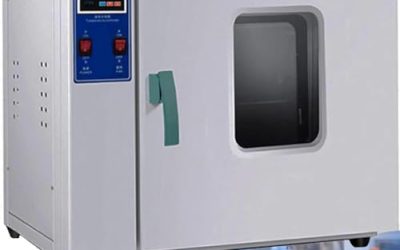
2. YANDDEA Laboratory Drying Oven, 70L

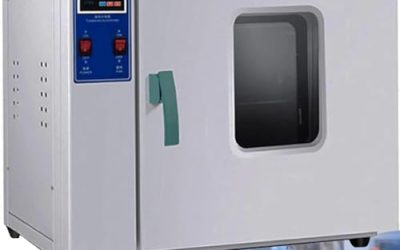
The YANDDEA laboratory drying oven is the pick for larger development batches. Its PID controller covers 50 to 300°C with listed accuracy of 0.1°C, and forced-air convection keeps heat uniform across the chamber. A microcomputer timer, alarm functions, and temperature calibration support repeatable cycles, which is exactly what prototype comparisons depend on.
The galvanized steel body has a corrosion-resistant electrostatic spray finish, and two trays rated to 15 kg each carry heavier parts and fixtures. The listing presents several capacities from 15.6L to 136L; the 70L size is a practical middle ground for a development lab that outgrows a compact oven but does not need a floor-standing unit.
Best for: Labs scaling up from small prototype runs to larger validation batches.
Keep in mind: Confirm the capacity and voltage option selected on the listing before ordering, since this listing presents multiple sizes. The 70L chamber needs a deep, sturdy bench.
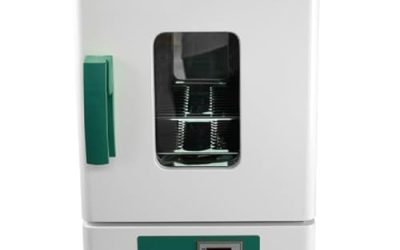
3. Microyn Digital Bench-top Compact Drying Oven, 18L

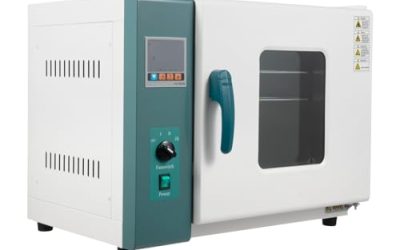
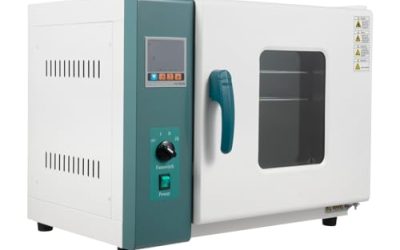
The Microyn MT-WHL-25AB is the compact pick for early-stage development, when batches are tiny and bench space is precious. Its 18-liter (0.63 cu ft) chamber uses gravity convection, so heated air rises naturally without a fan disturbing light samples, films, or powders. The digital constant-temperature controller covers room temperature plus 10°C to 300°C, and the unit runs on 110V at 600W.
Two shelves and a viewing window come with the oven, and the external dimensions of 380 x 455 x 568 mm keep it to a modest benchtop footprint. It is a sensible choice for a single engineer or a small team testing one formulation at a time.
Best for: Early-stage prototyping, small sample runs, and crowded benches.
Keep in mind: Gravity convection heats more gently than forced air, so drying times can be longer and shelf-to-shelf uniformity depends on careful loading. The 18-liter chamber is too small for multi-tray comparative runs.
Comparison Table
| Model | Capacity | Temperature Range | Key Feature | Best For |
|---|---|---|---|---|
| SODONAD 101-0AB | 45L | RT+10 to 300°C | Forced-air PID control, glass window | Comparative prototype batches |
| YANDDEA Laboratory Drying Oven | 70L | 50 to 300°C | PID control, 0.1°C listed accuracy | Larger validation batches |
| Microyn MT-WHL-25AB | 18L | RT+10 to 300°C | Compact gravity convection | Early-stage small runs |
FAQ
What temperature range do I need for product development drying?
Most drying, curing, and heat-treatment work falls between room temperature and 300°C. All three picks above reach 300°C, which covers the common range for polymers, coatings, adhesives, and electronic components.
Is forced-air or gravity convection better for prototypes?
Forced air gives more even temperatures across shelves and faster drying, which suits comparative batches. Gravity convection is gentler and suits light films, powders, and samples that moving air could disturb.
How important is PID control for development work?
PID control holds the chamber closer to the set temperature than a simple on-off thermostat. When the goal is to compare formulations, that stability removes one variable from the experiment.
Can one benchtop oven handle both drying and curing?
Yes, if the temperature range and control are adequate. A 300°C forced-air oven with a timer and alarm can dry samples, cure coatings, and heat-treat small parts, though flammable or corrosive materials must never be placed in a standard drying oven.
What size chamber should a development lab choose first?
An 18-liter oven suits single-tray work. A 45-liter oven suits teams that compare several variants at once. Choose the smallest chamber that fits the largest batch you run regularly, and leave room on the bench for loading trays safely.
Conclusion
For product development, the SODONAD 101-0AB 45L is the strongest all-around choice, combining forced-air uniformity, PID control, and room for comparative batches. The YANDDEA 70L steps up capacity for validation work, while the Microyn 18L keeps early-stage prototyping compact and affordable in bench space. Whichever size fits the workload, prioritize stable PID control, even heat, and a chamber that matches the largest batch the team runs. Those three qualities do more for reliable development results than any other feature on the specification sheet.
Disclosure: As an Amazon Associate, we may earn from qualifying purchases.
More from Amazon
Programs that pair well with the guide above. Offers and eligibility are set by Amazon and may change.
Collect the home and kitchen items you want in one registry that guests can shop from.
Create a wedding registrySet up recurring deliveries of everyday items on eligible products. Terms and savings are set by Amazon.
Explore Subscribe & SaveFree shipping on eligible items, Prime Video and more. Eligible new members can start with a free trial.
Start a Prime free trialAudiobooks and podcasts to listen to on the go. Eligible new members can start with a free trial.
Try Audible freeAs an Amazon Associate we earn from qualifying purchases.