Key takeaways
- Find the best benchtop drying ovens for quality-control labs, with stable PID control, uniform heat, and alarms that support repeatable checks.
The best benchtop drying ovens for quality-control labs are chosen for one quality above all others: repeatability. A QC lab runs the same checks the same way, batch after batch, and the drying oven is part of that chain. If the chamber temperature drifts, if one shelf runs hotter than another, or if a cycle ends at a different time than planned, the check itself becomes a source of variation. That is the opposite of what quality control is for.
QC work also tends to run on fixed procedures with defined temperatures, times, and acceptance limits. The oven therefore needs controls that can be set precisely, verified against a reference, and relied on to behave the same way every shift. The three benchtop models below were selected for stable PID control, uniform heat, alarm functions, and chambers that support documented, repeatable routines.
How to Choose a Benchtop Drying Oven for Quality-Control Labs
PID control and temperature stability
A PID controller adjusts heater output continuously to hold the set temperature, rather than swinging above and below it. For QC work, look for PID control with a fine display resolution and a stated fluctuation near 1°C. Stable control keeps every sample in a batch exposed to the same thermal history.
Temperature uniformity and calibration
Uniformity describes how much the temperature varies from one part of the chamber to another. Forced-air convection reduces that variation by circulating heated air. A temperature calibration function is equally important in a QC setting: it lets the lab align the oven display with a calibrated reference thermometer and document the check.
Alarms and timer functions
An over-temperature alarm protects samples and flags a fault before it ruins a run. A programmable timer ends cycles consistently, so drying time does not depend on who is on shift. Both features support the written procedures that QC labs depend on.
Capacity matched to the check
QC batches are often fixed in size by the sampling plan. An 18-liter chamber suits small checks and single-tray loads. A 45-liter chamber with two trays handles routine batch checks, while a 70-liter chamber suits labs that run larger lots through the same procedure. Oversizing wastes warm-up time and bench space; undersizing forces split batches that may not match.
Chamber material and observation window
A stainless steel interior resists corrosion and is easy to clean and inspect, which supports contamination control between lots. A tempered glass observation window lets staff confirm the state of a load without opening the door and disturbing the cycle.
Power, placement, and documentation
Confirm the voltage on the listing matches the lab supply and that the bench can carry the weight; a 45-liter oven can weigh more than 70 pounds. Keep the manual and the calibration record with the equipment log, and record the set temperature, time, and load for each QC run.
Our Top Picks
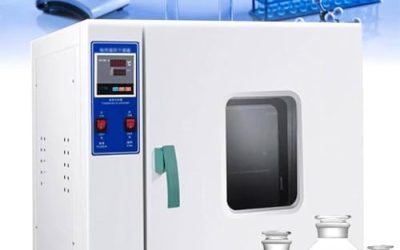
1. SODONAD 101-0AB 45L Horizontal Electric Blast Drying Oven

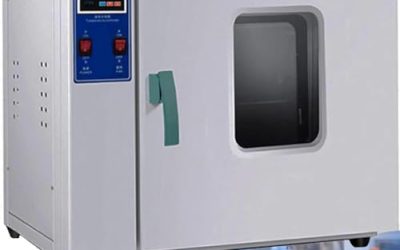
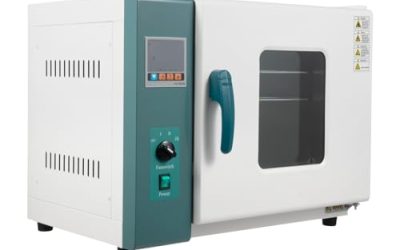
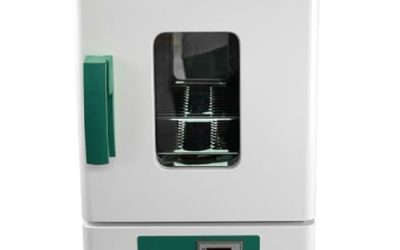
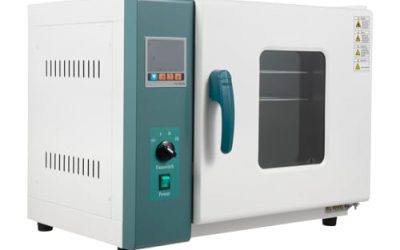
The SODONAD 101-0AB is the strongest all-around pick for a QC bench. Its digital PID controller includes timing, an over-temperature alarm, temperature deviation correction, and a self-tuning function, which is the combination a QC procedure needs to stay consistent. The temperature range runs from room temperature plus 10°C to 300°C (572°F), and forced-air convection circulates heated air for even drying across the two adjustable trays, each rated to 33 pounds.
The 45-liter chamber fits routine batch checks without forcing split loads, and the stainless steel liner and double-layer tempered glass observation window support cleaning and visual checks without opening the door. The unit runs on 110V at 1000W.
Best for: Routine QC batch checks that need documented, repeatable drying cycles.
Keep in mind: At 46.5 x 65 x 49.5 cm and 71 pounds, this oven needs a deep, sturdy bench and two people to position. Verify the set temperature against a calibrated reference thermometer before the first QC run.
2. YANDDEA Laboratory Drying Oven, 70L

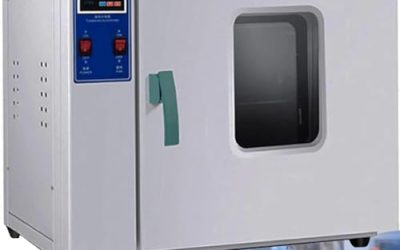
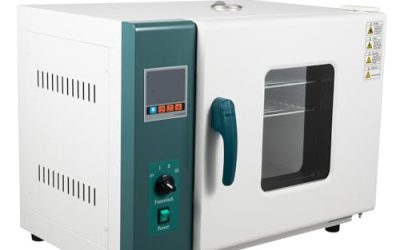
The YANDDEA laboratory drying oven is the pick for QC labs that process larger lots. Its PID controller covers 50 to 300°C with listed accuracy of 0.1°C, and forced-air convection keeps the chamber uniform across two trays rated to 15 kg each. A microcomputer timer, alarm functions, and temperature calibration support the repeatable, documented cycles that quality procedures require.
The galvanized steel body has a corrosion-resistant electrostatic spray finish built for daily use. The listing presents several capacities from 15.6L to 136L; the 70L size suits a QC lab that runs larger lots through a single procedure without splitting batches.
Best for: Larger QC lots and shared labs that run the same check across many samples.
Keep in mind: Confirm the capacity and voltage option selected on the listing before ordering. A 70L chamber is a large benchtop unit, so check bench depth, weight capacity, and ventilation clearance.
3. Microyn Digital Bench-top Compact Drying Oven, 18L

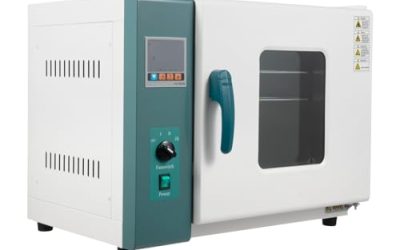
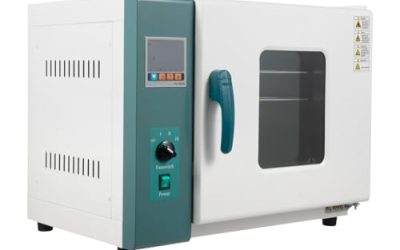
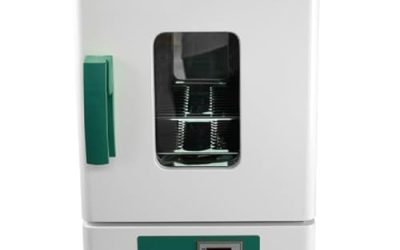
The Microyn MT-WHL-25AB suits small QC checks and single-tray loads. Its 18-liter (0.63 cu ft) chamber uses gravity convection, which heats gently without a fan, and the digital constant-temperature controller covers room temperature plus 10°C to 300°C. Two shelves and a viewing window come with the oven, and the 600W, 110V design runs from a standard bench outlet.
The compact footprint of 380 x 455 x 568 mm lets it sit on a crowded QC bench beside the instruments it supports, which is useful when a check needs its own dedicated oven to avoid cross-contamination between procedures.
Best for: Small QC checks, dedicated single-procedure ovens, and crowded benches.
Keep in mind: Gravity convection is gentler than forced air, so full loads need careful spacing and may take longer to reach uniform dryness. The 18-liter chamber cannot hold large batch checks.
Comparison Table
| Model | Capacity | Temperature Range | Key Feature | Best For |
|---|---|---|---|---|
| SODONAD 101-0AB | 45L | RT+10 to 300°C | Forced-air PID control with alarm | Routine QC batch checks |
| YANDDEA Laboratory Drying Oven | 70L | 50 to 300°C | PID control, 0.1°C listed accuracy | Larger QC lots |
| Microyn MT-WHL-25AB | 18L | RT+10 to 300°C | Compact gravity convection | Small checks and dedicated use |
FAQ
Why does PID control matter so much in a QC lab?
PID control holds the chamber close to the set temperature with small fluctuations. In quality control, that stability removes temperature drift as a source of variation between batches, so a failed check points to the product, not the oven.
How often should a QC drying oven be calibrated?
Follow the lab quality manual and the instrument schedule. As a first step, verify the chamber temperature against a calibrated reference thermometer at the temperatures used most often, and record the result in the equipment log.
Is forced-air or gravity convection better for QC drying?
Forced air gives more uniform temperatures across a full load, which suits batch checks. Gravity convection is gentler and suits light or loose samples. The written procedure should specify which airflow the check was validated with.
What should be recorded for each QC drying run?
At minimum, record the oven identity, set temperature, cycle time, load description, and the operator. That record lets the lab trace any unusual result back to the exact conditions of the run.
Can a benchtop oven be used for both QC checks and general drying?
It can, but many QC labs prefer a dedicated oven for checks so that general drying loads cannot contaminate a controlled procedure. If one oven serves both purposes, clean the chamber between uses and keep the schedule in the equipment log.
Conclusion
For quality-control labs, the SODONAD 101-0AB 45L is the most balanced choice, pairing forced-air uniformity with PID control, an over-temperature alarm, and temperature correction functions. The YANDDEA 70L extends that approach to larger lots, while the Microyn 18L covers small checks and dedicated single-procedure use. Whichever size fits the sampling plan, insist on stable PID control, a calibration function, and alarms that protect the run. In quality control, the oven is part of the measurement, and it should behave like one.
Disclosure: As an Amazon Associate, we may earn from qualifying purchases.
More from Amazon
Programs that pair well with the guide above. Offers and eligibility are set by Amazon and may change.
Collect the home and kitchen items you want in one registry that guests can shop from.
Create a wedding registrySet up recurring deliveries of everyday items on eligible products. Terms and savings are set by Amazon.
Explore Subscribe & SaveFree shipping on eligible items, Prime Video and more. Eligible new members can start with a free trial.
Start a Prime free trialAudiobooks and podcasts to listen to on the go. Eligible new members can start with a free trial.
Try Audible freeAs an Amazon Associate we earn from qualifying purchases.